
About School of Love

A community learning how to love well, together.

School of Love is a community of formation in Winston-Salem. We follow the way of Jesus through prayer, shared meals, justice, and beloved community across systemic difference.

§ 01 — Our story

Born of a longing for something deeper than belief.

School of Love began with a question many of us were quietly carrying: what would it look like to follow Jesus not only as private belief, but as a shared way of life — a daily practice in real neighborhoods, with real neighbors, across real difference?

We gathered around tables, prayed common prayers, told the truth about our histories, and slowly started to recognize a movement taking shape — a community of formation rooted in love, place, and the historic practices of the church.
§ 02 — Love-rooted discipleship

What we mean by love-rooted discipleship.

Discipleship that does not begin and end in love has lost its center. The way of Jesus is the way of love — love of God, love of neighbor, love of enemy, love of the earth, love of the stranger.

Love-rooted discipleship means we measure our formation not by how much we know, but by how well we love. By how present we are to one another. By how courageous we are in the face of injustice. By how slowly and patiently we tend to the relationships we have been given.

§ 03 — Life together

Life together in Christ — for others.

Our life together is not for ourselves. The community we are forming is for the city, the neighbor, the stranger, the suffering, the searching, the church, and the future.

We borrow this language from a long tradition — Bonhoeffer's life together, the desert mothers and fathers, the Black church, base communities in Latin America, monastic and new monastic movements, and the everyday faithfulness of ordinary disciples who chose to stay and love.

§ 04 — Why Winston-Salem

A formation rooted in this city.

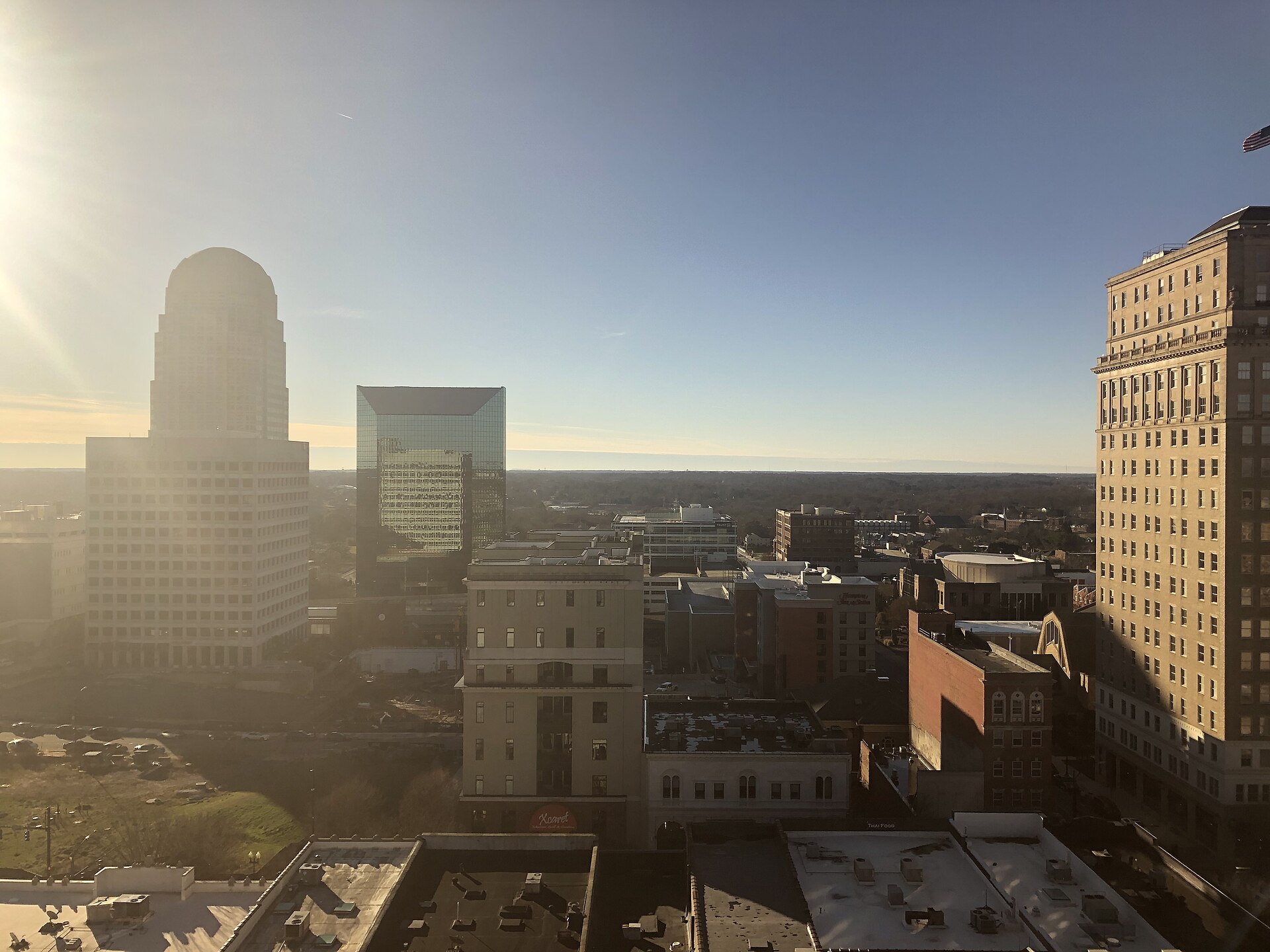
Winston-Salem is a city of beautiful, complicated history — Moravian beginnings, tobacco wealth, deep Black church witness, civil rights struggle, persistent segregation, and a vibrant present.

We believe formation cannot be abstracted from place. We are here, in this city, with these neighbors, learning what love requires of us in this particular soil.

§ 05 — Historic practices

Old practices for a new century.

We are not inventing something new. We are returning to ancient streams — common prayer, sabbath, fasting and feasting, confession, pilgrimage, mutual aid, and breaking bread — and letting them re-form us for a wounded, hopeful moment.

These practices are not techniques. They are ways of attending — to God, to one another, and to the world God loves.

A next step

Come and see.

The best way to understand School of Love is to come close — to a meal, a prayer, a cohort, a gathering. We'd love to make space for you.